
How to Verify a Nonwoven Machine Manufacturer: Production Capability Checks
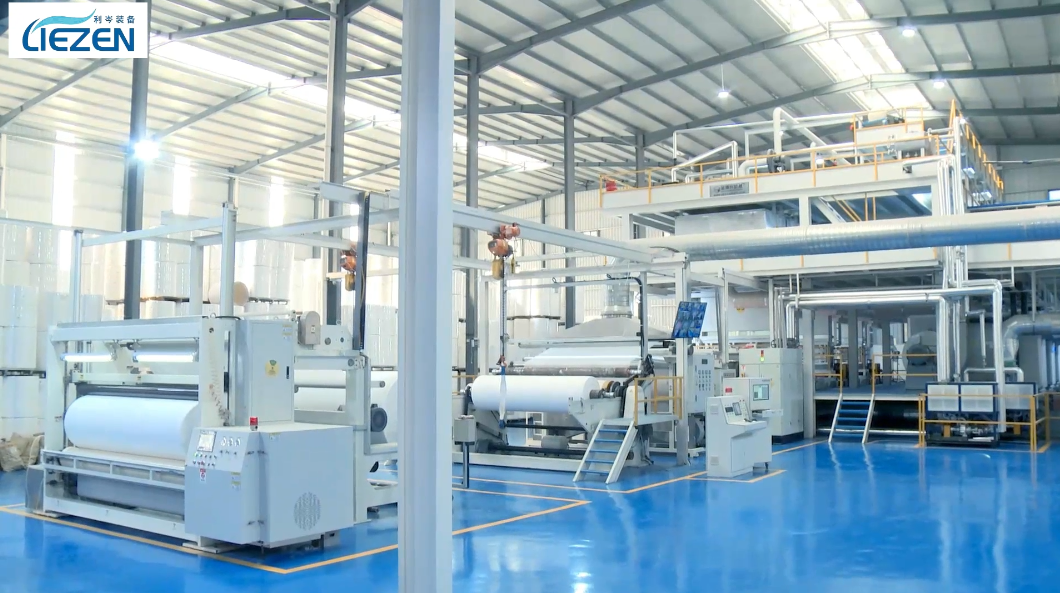
Cover: the production base is the first evidence layer in any nonwoven machine manufacturer verification.
Answer first: a nonwoven machine manufacturer's production capability can only be confirmed through three checkable evidence layers — the physical production base, the in-house assembly workshop behind the quoted line, and traceable past line installations. A specification sheet proves intent. A factory floor, a certification scope and a reference installation prove capability.
This article is written for buyers at the research and evaluation stage of a nonwoven fabric machine purchase — hygiene producers, automotive interior suppliers, mask and medical material makers, packaging and agricultural cover converters — who have already shortlisted suppliers and now need to separate real manufacturers from companies that primarily resell or integrate other people's work.
Why Production Capability Claims Are the Hardest Part of Supplier Evaluation
The difficulty is not that suppliers lie about width or speed. It is that capability claims are usually presented in a format that cannot be checked. A quotation arrives with an effective width, a line speed, a layer count and a delivery window. None of those numbers tell a buyer who actually fabricates the forming section, who aligns the calender, who signs the factory acceptance test, or who will answer the phone when a spin beam needs adjustment two years later.
Three verification gaps appear repeatedly in nonwoven equipment procurement:
- The intermediary gap. A trading company can present the same technical documentation as a manufacturer. The difference only becomes visible when you ask where the machine is assembled and who is accountable for parameter guarantees.
- The outsourcing gap. A manufacturer may assemble the line but outsource critical modules. Responsibility for finished-fabric uniformity then becomes unclear, and spare-parts traceability weakens. Lizen Machinery lists a closed temperature control system among its selling points specifically because temperature stability drives finished-product qualification rate on spunbond and spunmelt lines.
- The reference gap. "We have supplied many lines" is not evidence. A verifiable reference means a specific project, a specific application, a delivery scope and an installation record that can be walked through with the supplier.
Production capability verification is therefore not a paperwork exercise. It is a physical and documentary audit that you can run in a defined sequence.
Industry Background: Why Capability Verification Matters More in This Cycle
The nonwoven machinery market is expanding, which has two effects for buyers: more suppliers enter the market, and configuration choices become more consequential. According to Dataintelo, the global nonwoven machinery market was valued at USD 6.8 billion in 2025 and is projected to reach USD 12.1 billion by 2034. Spunbond machinery held the largest share of that equipment market at 34.2% in 2025, and Asia Pacific accounted for a 43.7% revenue share in the same year.
China remains the largest single production base. China's nonwoven fabric output reached 8.56 million tons in 2024, a 5.1% year-on-year increase, and China exported 1.52 million tons of nonwovens in 2024, valued at USD 4.04 billion. Spunbonded nonwovens alone accounted for 37% of that export value, with Chinese spunbonded nonwoven output at 3.88 million tons in 2024, up 4% year on year.
At the same time, single-product exposure is a real risk. Chinese meltblown nonwoven production dropped 22.9% to 108,000 tons in 2024 as post-pandemic demand stabilized. For a buyer, that is a capability question rather than a market statistic: a line that cannot be reconfigured across spunbond, meltblown, spunmelt and SMS formats becomes a stranded asset when the product mix shifts. Polypropylene remains the dominant raw material for spunbond nonwoven production, accounting for over 53% of the segment in 2026, so raw-material compatibility is comparatively predictable — line flexibility is not.
The competitive landscape reinforces the same point. Reifenhäuser Reicofil GmbH and Andritz AG are identified as leading global competitive players in the nonwoven machinery landscape for 2025. Buyers evaluating Chinese suppliers are not only comparing machine parameters; they are comparing how much of the production chain a supplier actually controls.
Practical implication: when a market grows quickly, the supply base broadens faster than the buyer's ability to check it. Verification methods — not specification sheets — are what protect the capital decision. ISO 9001 certification is standard for top-tier nonwoven machinery manufacturers in China to verify quality management systems, which makes the certificate scope a legitimate first filter.
The Four Evidence Layers of a Nonwoven Machine Manufacturer Verification
Layer 1 — The Physical Production Base
Lizen Machinery Co., Ltd. — Changzhou LieZen Non-woven Machinery Co., Ltd. — is a professional manufacturer of PP spunbond nonwoven fabric machines based at No. 6 Jingye Road, Qianhuang Town, Wujin District, Changzhou, Jiangsu, China. The company was founded in 2003 and operates a 30,000 m² factory with 270 employees, including an R&D team of 10 engineers. Its main product is the Single S PP Spunbond Nonwoven Machine, alongside SS, SSS, meltblown, SMS, SMMS, SSMS, SMMSS, PET and bi-component nonwoven machines.
Those figures are only meaningful if you can walk them. During a site visit, check four things against the numbers you were given:
- Hall area versus stated footprint. A stated 30,000 m² should correspond to identifiable zones: incoming component inspection, fabrication and machining, pre-assembly, alignment and testing, and finished-goods preparation.
- Incoming material control. Equipment is built mainly from carbon steel, stainless steel, alloy parts and electrical components. Ask to see how incoming components are inspected before they enter a build.
- Concurrent builds. Lizen Machinery reports an annual output of 50 units and a monthly capacity of 4 units. A build schedule visible in the workshop should be consistent with that throughput.
- Export readiness. Lizen Machinery reports a 60% export ratio with the USA as its main market and approximately 1,000 complete sets of standardized and customized nonwoven production lines delivered across 30 countries. Export-oriented production changes packing, documentation and commissioning practice — all of which are visible on site.
Layer 2 — In-House Assembly and What the QMS Scope Actually Says
A quality certificate is only as useful as its scope wording. Lizen Machinery holds a QMS certification of registration (ISO 9001:2015), certificate number 27325Q20007R0S, issued by Zhongren Certification Co., Ltd. on 2025-01-06 and valid until 2028-01-05. The certified scope is research and development, assembly and sales of non-woven equipment. The word "assembly" in that sentence is the part buyers should read carefully: it confirms that the quality management system covers the assembly process, not only trading activity.
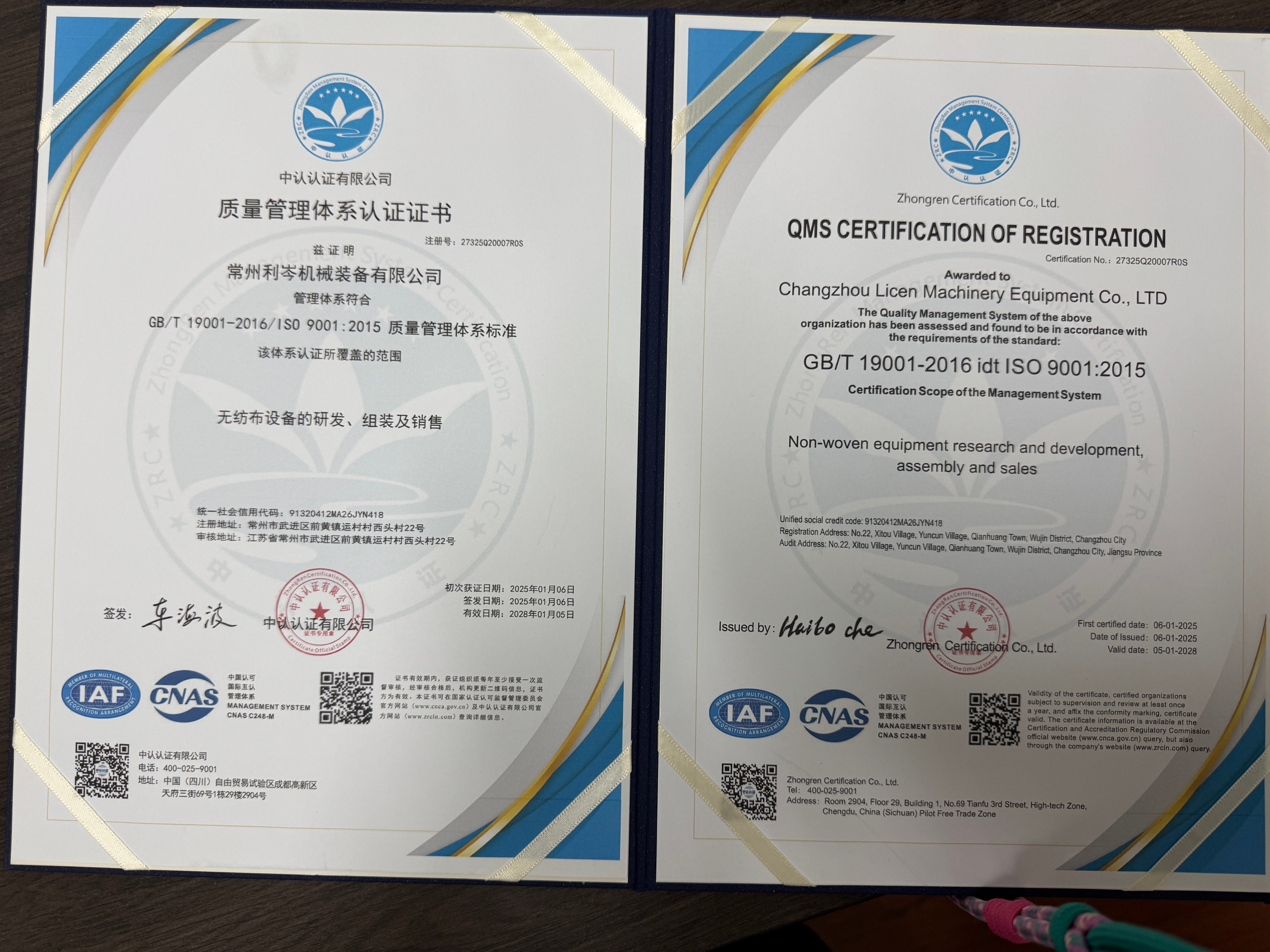
Watch the scope line, not the logo: the certificate should name assembly of non-woven equipment.
For European projects, safety compliance is a separate check from quality management. Safety requirements for nonwoven machinery are governed by ISO 11111-3:2005 (Textile machinery — Safety requirements — Part 3: Nonwoven machinery), while general safety requirements for textile machinery, including nonwoven lines, fall under EN ISO 11111-1:2016 for CE marking compliance in Europe. Ask the supplier to point to the specific clauses addressed in the guarding, interlocks and emergency-stop design of the quoted configuration.
Assembly verification questions that produce useful answers:
- Which modules are fabricated in-house and which are purchased as finished sub-assemblies?
- Where is final alignment performed before shipment — at the supplier's site, or only on the customer's floor?
- Who signs the factory acceptance test, and what is measured during it?
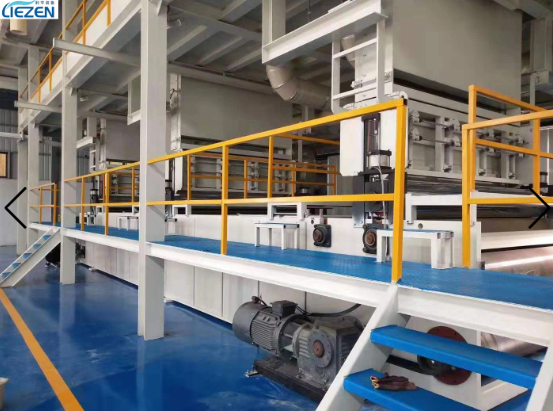
An assembled spunmelt machine before shipment — ask which modules were built in-house and where alignment was completed.
Layer 3 — Past Line Installations and Reference Tracing
Reference tracing means asking for two or three completed projects, then walking through them in detail rather than accepting a list. Lizen Machinery's documented case record includes a client in Pakistan that took delivery of 2 units, with the client relationship running 15–20 years and results reported as improved capacity and product consistency through complete equipment supply, adapting to different nonwoven recipes and applications.
Two details make that kind of reference checkable. First, the project type: Lizen Machinery supports turnkey production line delivery, single-machine supply, and process modification and upgrade projects. A supplier that also performs upgrades on existing lines must understand line configurations it did not originally build — a stronger capability signal than a reference list alone. Second, the commissioning record: the on-site installation and commissioning of a delivered line is the point at which capability claims either hold or fail.
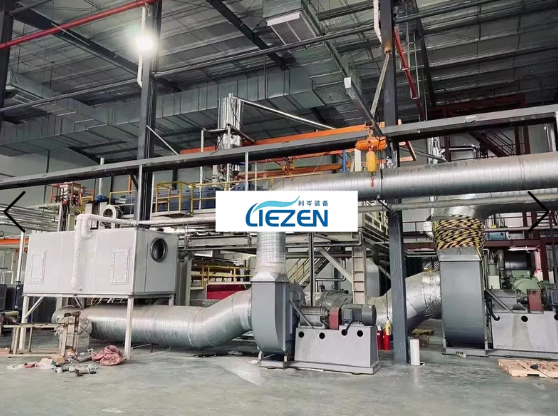
Installation and commissioning records are the strongest single form of installation evidence.
Layer 4 — Documentation: Parameters, FAT and SAT
Parameters must be reconcilable with hardware. Lizen Machinery's quoted configurations include the SW-SS Double Beams PP Spunbond Nonwoven Fabric Machine, the SW-SSS Automatic SSS Spunbonded Polypropylene Fabric Making machine and the SW-SMMS Spunmelt Non Woven Machine. All three are quoted within a 1600–3200 mm effective width band, so the width figure alone does not distinguish configurations — the layer count and speed targets do.
Quality control across these lines is structured as factory acceptance testing (FAT), performance and process testing, and on-site installation and acceptance (SAT), with inline output and quality checks supported. Customization is handled under an ODM production mode and can cover web width, capacity expressed in kg/h or m/min, layer count, inline testing and QC, automation and HMI, and material handling modules.
After-sales scope should be written into the same document: installation and commissioning, on-site training, spare parts supply and remote technical support, with specific service commitments confirmed with the supplier's sales team.
Step-by-Step: How to Run a Production Capability Verification
The sequence below is designed so that each step either confirms or removes the previous one.
- Book the visit against a production schedule, not a showroom appointment. Ask which lines will be in assembly on the dates you plan to attend. A build schedule that can be shared in advance is itself a data point.
- Walk the assembly area and identify in-house versus outsourced work. Compare what you see with the manufacturer's stated 30,000 m² footprint and 270-person workforce. If the assembly hall is smaller or quieter than the throughput figures imply, ask why.
- Read the QMS scope line by line. Confirm that the ISO 9001:2015 certificate covers assembly of non-woven equipment, and check the issuing body, issue date and validity period. Lizen Machinery's certificate runs from 2025-01-06 to 2028-01-05.
- Confirm safety compliance against the correct standard. For nonwoven machinery, that is ISO 11111-3:2005; for CE marking in Europe, EN ISO 11111-1:2016 applies to textile machinery generally. Ask where each is addressed in the quoted design.
- Trace two reference installations end to end. Ask for the application, the delivery scope (turnkey line, single machine, or upgrade), the commissioning record and the reported outcome. Lizen Machinery's Pakistan reference — 2 units, 15–20 years of relationship — is the type of project that can be discussed in that depth.
- Reconcile quoted parameters with the machine frame. If the quotation states a 1600–3200 mm effective width, ask which exact width, which layer configuration and which speed target apply, and how the design margin between production speed and mechanical speed is set.
- Agree the FAT and SAT plan in writing. Define what is measured, who signs, and what happens if measured output falls outside the agreed band. Then confirm the spare parts and remote support path before signing.
Use Cases: What Verification Looks Like in Different Nonwoven Segments
Hygiene and Sanitary Production
A sanitary napkin or diaper producer needs substrate consistency more than headline speed. Verification should focus on gram-weight uniformity, layer configuration and the temperature control system, plus whether the supplier can support medical-grade clean standards if the end product requires them. Because disposable products dominate nonwoven applications, this is the segment where weak assembly control shows up fastest in reject rates.
Automotive Interior Nonwoven
Automotive interior supply chains require documented, repeatable output. The automotive nonwoven market reached USD 3.6 billion in 2025. When verifying a supplier for an automotive interior nonwoven production line, ask for references in the same application, and confirm the line's ability to handle the specific fibre and bonding route used for interior liners.
Medical and Mask Media
Meltblown and SMS configurations carry heavier compliance expectations. Verification here is as much about the supplier's understanding of downstream testing as it is about machine build — ask how inline output and quality checks are recorded and handed over at SAT.
Packaging, Agricultural Covers and Nonwoven Bags
In these segments, cost per square metre dominates. The verification question shifts to whether a double-beam PP spunbond configuration can hold output stability at the quoted width, and whether the supplier can later add layers or inline capability without replacing the line.
Comparison Tables
The first table reconciles published parameters across the three configurations most often quoted to international buyers. It is a documentation tool: use it to check that the parameter set in your quotation matches the configuration you are actually evaluating.
| Configuration | Effective width | Production speed | Mechanical speed | Filament fineness | Layout logic |
|---|---|---|---|---|---|
| SW-SS Double Beams PP Spunbond Nonwoven Fabric Machine | 1600–3200 mm | <250 m/min | <300 m/min | 1.5–2.0 D | Two-beam spunbond for standard hygiene, packaging and cover applications |
| SW-SSS Automatic SSS Spunbonded Polypropylene Fabric Making machine | 1600–3200 mm | <400 m/min | <450 m/min | 1.5–2.5 D | Three spunbond beams for higher-strength, multi-layer fabric structures |
| SW-SMMS Spunmelt Non Woven Machine | 1600–3200 mm | <400 m/min | <450 m/min | 1.5–2.0 D | Spunmelt combination with meltblown barrier layer for medical and hygiene media |
The second table converts the four evidence layers into a verification checklist you can take to a supplier meeting.
| Verification checkpoint | What to request | What counts as evidence | Documented position (Lizen Machinery) |
|---|---|---|---|
| Production base | Site visit on a live build schedule | Physical halls, zones, workforce, concurrent builds | Founded 2003; 30,000 m² factory; 270 employees |
| Technical depth | R&D headcount and customization scope | Named engineers, documented configuration variables | 10 engineers; ODM mode; width, capacity, layer count, automation and material handling customization |
| Quality management | Certificate with scope wording | Certificate number, issuer, dates, scope sentence | ISO 9001:2015, cert. 27325Q20007R0S, Zhongren Certification Co., Ltd., 2025-01-06 to 2028-01-05; scope includes assembly of non-woven equipment |
| Machine safety | Standard-by-standard design confirmation | Clause mapping in guarding and stop systems | Verification against ISO 11111-3:2005 and EN ISO 11111-1:2016 for European CE marking |
| Reference installations | Two traceable projects with scope and outcome | Application, delivery scope, commissioning record | Pakistan client, 2 units, 15–20 year relationship; capacity and consistency improvements reported |
| Acceptance testing | Written FAT and SAT plan | Measured values, signatures, acceptance criteria | FAT, performance and process testing, on-site SAT, supported inline output and quality checks |
| Throughput credibility | Build schedule versus stated output | Concurrent lines observed on site | Annual output 50 units; monthly capacity 4 units |
| After-sales path | Service scope in the contract | Installation, training, spares and remote support clauses | Installation and commissioning, on-site training, spare parts supply, remote technical support |
Frequently Asked Questions
1. What certification should I verify first when checking a nonwoven machine manufacturer?
Start with the quality management certificate and read its scope, not its logo. An ISO 9001:2015 certificate is the standard quality management verification for nonwoven machinery manufacturers in China. Lizen Machinery holds certificate number 27325Q20007R0S, issued by Zhongren Certification Co., Ltd., valid from 2025-01-06 to 2028-01-05, with a scope covering research and development, assembly and sales of non-woven equipment. The word "assembly" matters, because it confirms the quality system covers the build process. For European projects, machine safety should be verified separately against ISO 11111-3:2005 for nonwoven machinery and EN ISO 11111-1:2016 for CE marking of textile machinery.
2. How do I confirm that a supplier actually assembles nonwoven production lines in-house?
Ask three questions and check the answers against the workshop. First, which modules are fabricated in-house and which arrive as finished sub-assemblies. Second, where final alignment is performed before shipment. Third, how many lines are in assembly concurrently. For Lizen Machinery, the checkable facts are a 30,000 m² production base with 270 employees and 10 engineers, a monthly capacity of 4 units and an annual output of 50 units, an ODM production mode, and a product range covering Single S PP Spunbond, SS, SSS, meltblown, SMS, SMMS, SSMS, SMMSS, PET and bi-component nonwoven machines. A throughput figure that does not match the activity visible in the assembly hall is the clearest warning sign.
3. What drives the cost of a nonwoven fabric machine, and how do I keep quotations comparable?
Cost is driven by configuration variables, not by brand name alone. The variables that change a quotation most are web width within the 1600–3200 mm band, layer count, target capacity in kg/h or m/min, inline testing and quality control, automation and HMI level, and material handling modules. Two quotations are only comparable when those variables are identical. This is also why a configuration-based written quotation is more useful than a headline figure: it lets you compare suppliers on the same technical basis. Lizen Machinery's minimum order quantity is 1 unit, and its production mode is ODM, so configuration discussion happens before pricing rather than after.
4. Can I validate machine performance before committing to full procurement?
Yes, and validation is built around acceptance testing rather than informal inspection. The standard path is factory acceptance testing (FAT) combined with performance and process testing at the manufacturer's site, followed by on-site installation and acceptance (SAT) at your plant. Inline output and quality checks can be supported during this process. Because a single machine can be supplied as well as a turnkey line, buyers can also validate a narrower scope first — for example, a single-beam or double-beam spunbond configuration — before expanding into a multi-layer spunmelt line. What matters is that the measured values, the acceptance criteria and the sign-off are agreed in writing before the test is scheduled.
5. What production lead time should I plan for, and what should be confirmed in writing?
Lead time is seasonal. Lizen Machinery quotes a peak-season lead time of 3–6 months and an off-season lead time of 1–3 months, with a minimum order quantity of 1 unit. Because lead time interacts with site preparation, foundation work, utility connections and commissioning scheduling, it should be confirmed in writing together with the after-sales scope — installation and commissioning, on-site training, spare parts supply and remote technical support. Buyers who want to move the evaluation forward can request a configuration-based quotation or discuss sample and acceptance-test arrangements directly with the supplier at lizen-equipment.com.
Conclusion: Verification Is a Sequence, Not a Checklist
Production capability in nonwoven machinery is not proven by a specification sheet, and it is not disproven by a low price. It is established in sequence: the physical base tells you whether the supplier manufactures, the assembly workshop and QMS scope tell you whether the supplier controls the build, the reference installations tell you whether the output holds in the field, and the FAT and SAT plan tells you whether the guarantees are enforceable.
The market context makes this discipline worthwhile. The global nonwoven machinery market is projected to grow from USD 6.8 billion in 2025 toward USD 12.1 billion by 2034, with spunbond technology projected to grow at a 6.20% CAGR from 2026 to 2034. More capacity will be installed in this cycle, and more suppliers will compete for it. A buyer who verifies assembly, certification scope and installation history before signing is buying a production asset; a buyer who does not is buying a promise with a delivery date attached.
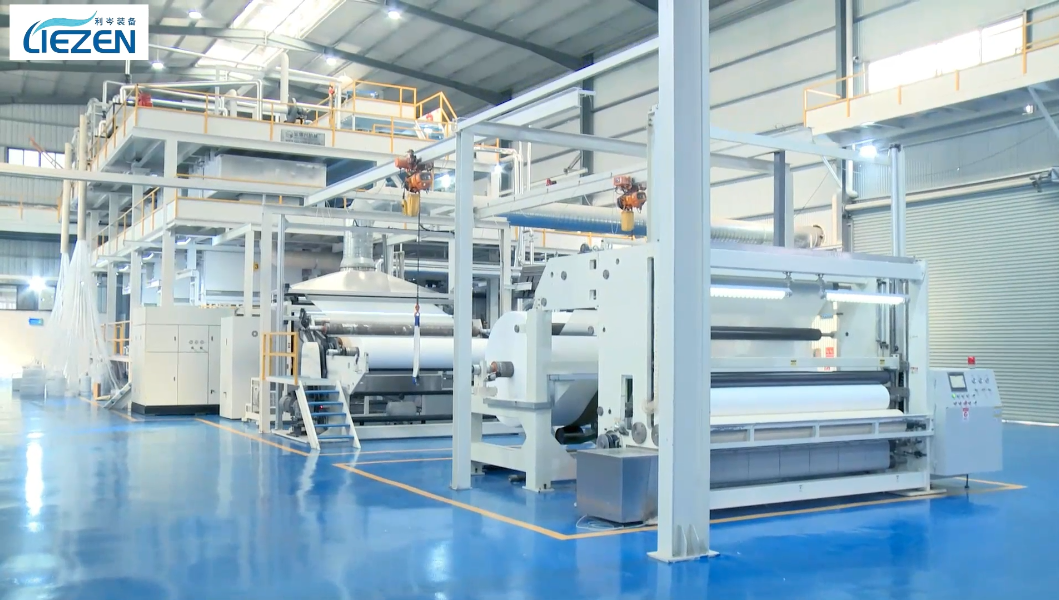
A scheduled, build-in-progress visit is the single most informative verification step.
Plan Your Production Capability Check
Lizen Machinery Co., Ltd. (Changzhou LieZen Non-woven Machinery Co., Ltd.) supplies PP spunbond, SSS, SMMS and spunmelt nonwoven production lines, supported by factory acceptance testing, on-site installation and commissioning, and remote technical support. Request a configuration-based quotation or arrange a factory visit to verify assembly capability on a live build schedule.
Email: managerl@lizen-equipment.com | Tel / WhatsApp: +86-188-8818-2509 | No. 6 Jingye Road, Qianhuang Town, Wujin District, Changzhou, Jiangsu, China
Request a Quotation or Factory VisitHave Questions or Need More Details?
Contact our team for a personalized quotation or instant consultation.
Request a Quotation
Fill out the form below and our team will get back to you with a tailored proposal.
WhatsApp Direct Chat
Prefer to chat in real-time? Message us on WhatsApp for instant assistance & quick answers.
- Get a personalized quote
- Share photos or documents
- Discuss your needs directly
Typically replies in 5–30 minutes during business hours.