Nonwoven Fabric Machine Selection: How Key Parameters Shape Output
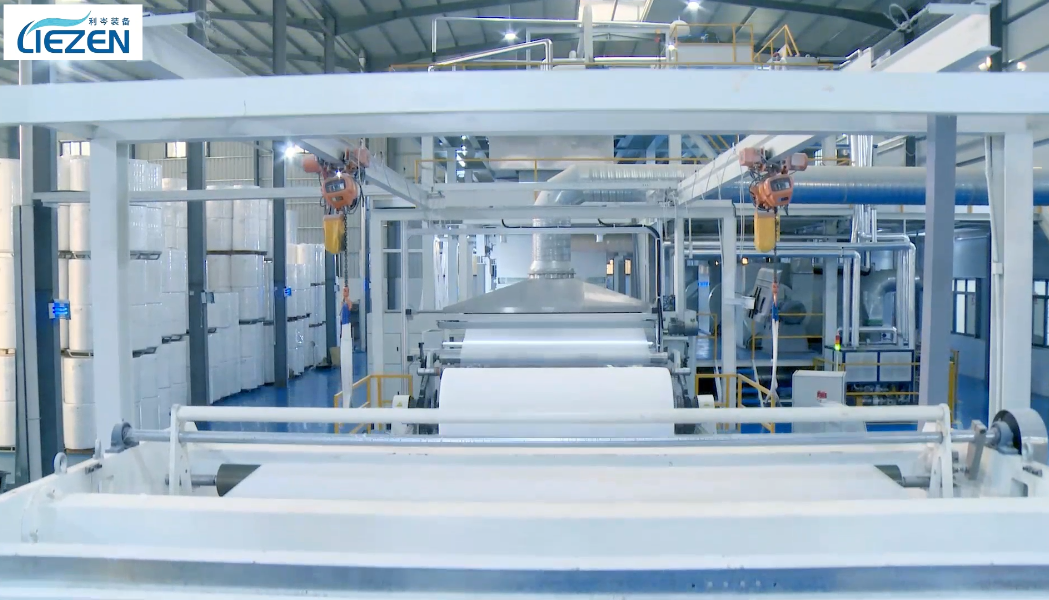
Cover: factory view of nonwoven machine production area — Changzhou LieZen Non-woven Machinery Co.,Ltd.
A nonwoven fabric machine is bought on parameters, not on adjectives. Effective web width, production speed, layer configuration, filament fineness, bonding method, raw-material handling and the scope of automation and inline quality control decide how many kilograms of fabric a line can deliver per hour, how stable that fabric will be, and how much of the machine's nominal capability is commercially usable. This technical guide explains what each parameter changes in production, where configurations trade off against one another, and how to rank parameters against the fabric you actually intend to sell.
Problem Definition: Why Parameter Mismatches Appear After Startup
Selection errors seldom look like equipment failures at the beginning. The machine runs. The problem appears later, as squeezed margins, drifting fabric properties or a line that cannot hold the speed written into the quotation. Three patterns account for most of these outcomes.
- Over-specified capacity. The buyer purchases width and speed aimed at a product that never becomes the main order. Capital and energy are consumed by capability that stays idle.
- Under-specified configuration. The layer set cannot deliver the barrier, strength or hand feel the end user requires, so the producer compensates with blending, extra processing or purchased fabric.
- Under-specified verification. Acceptance criteria are agreed verbally rather than against a measurable specification, so quality problems surface only after commercial production starts.
The reason these patterns repeat is that the parameters interact. Production speed cannot be raised in isolation, because filament fineness, cooling, bonding dwell time, web tension and width uniformity move together. A technical evaluation should therefore treat the line as one system and rank parameters against production objectives, instead of optimising each specification separately.
Industry Background: The Market Context That Makes Parameters Matter
The global nonwoven machinery market was valued at USD 6.8 billion in 2025 and is projected to reach USD 12.1 billion by 2034, according to Dataintelo. Within that equipment market, spunbond machinery held the largest share at 34.2% in 2025, while Asia Pacific accounted for a 43.7% revenue share in the same year (Dataintelo). Fortune Business Insights projects the spunbond technology market to grow at a CAGR of 6.20% from 2026 to 2034.
Production and trade data tell the same story from the fabric side. China's nonwoven fabric output reached 8.56 million tons in 2024, a 5.1% year-on-year increase, and China exported 1.52 million tons valued at USD 4.04 billion in the same year, according to the China Nonwovens & Industrial Textiles Association (CNITA) and China Customs. Spunbonded nonwovens accounted for 37% of that export value. Spunbonded output alone reached 3.88 million tons in China in 2024, up 4% year on year (CNITA).
Not every process segment moves at the same pace. Meltblown nonwoven production in China fell 22.9% to 108,000 tons in 2024 as post-pandemic demand stabilised (CNITA). Fabric demand is also concentrated by application: disposable products held approximately 59.8% of the nonwoven fabric market application share in 2023, while spunlaid (spunbond) technology represented 48.4% of the global nonwoven fabric market share (Grand View Research). On the polymer side, polypropylene remained the dominant raw material for spunbond production at 53.92% of the segment in 2026 (Fortune Business Insights).
For a buyer at the evaluation stage, the practical reading of this data is straightforward: spunbond-based configurations are the mainstream choice and remain the volume backbone of the industry, but demand differs sharply between application segments. The meltblown correction shows what happens when configuration decisions follow a temporary demand spike. Layer configuration, width and speed class should be matched to the product mix you can sell over the life of the line, not to the fastest-growing headline in the market report.
The Core Parameters of a Nonwoven Fabric Machine and Their Production Impact
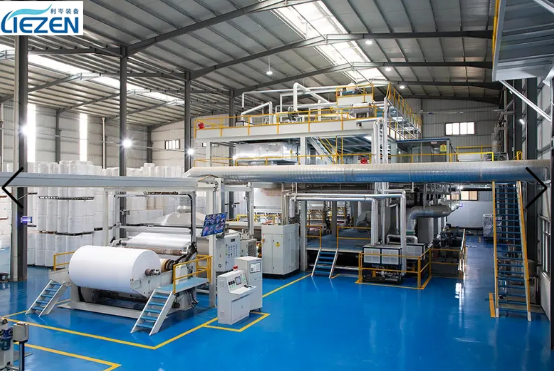
Figure 1: process layout of a nonwoven production line — factory view.
1. Process Configuration and Layer Count
Configuration is the first parameter because it defines the fabric, not merely the machine. LieZen builds PP spunbond and spunmelt lines across Single S, SS, SSS, meltblown, SMS, SMMS, SSMS, SMMSS, PET and bi-component configurations. Each additional spunbond beam adds filament layers that raise tensile strength, coverage and output potential. A meltblown layer inserts very fine fibres that improve barrier and filtration performance but contributes comparatively little strength. Combinations such as SMS or SMMS therefore separate two functions that a single spunbond web must otherwise compromise on: mechanical strength and barrier performance.
In production terms, layer count drives three things: the number of process variables an operator has to hold simultaneously, the energy and floor space the line consumes, and the complexity of grade changes. The selection rule that follows is to define the minimum layer set that satisfies the fabric performance requirement, and then add capacity through width or speed rather than through additional layers that the product does not need.
2. Effective Web Width
Effective width determines how much fabric exists per metre of line travel, which makes it one of the strongest levers on hourly output. Documented configurations in the PP spunbond and spunmelt families covered here are specified with effective widths of 1,600–3,200 mm. At a fixed line speed, output rises broadly in proportion to width.
The cost of that gain is uniformity. A wider machine demands even polymer distribution across the die, consistent temperature across the bonding calender, and stable web tension at the edges, where trimming and edge quality are decided. Width must also match the downstream process: if slitting, laminating or converting equipment works at a different effective width, an oversized line produces trim waste rather than saleable fabric. Width should be chosen against the converting width and the order mix, not against the largest number available.
3. Production Speed Versus Mechanical Speed
Two speeds appear on every specification sheet, and buyers frequently read only the higher one. Mechanical speed is the maximum the drive and mechanics can sustain. Documented values are below 300 m/min for the SS configuration and below 450 m/min for SSS and SMMS configurations. Production speed is the working speed at which the line delivers fabric that meets quality requirements: below 250 m/min for SS, below 400 m/min for SSS and SMMS.
The gap between the two numbers is not free capacity. It is operating headroom, and it is consumed by recipe changes, raw-material variation, start-up and grade transitions. A project specified on mechanical speed and planned around that figure tends to experience quality drift, higher scrap and more manual intervention — all of which reduce effective output rather than increase it. Production speed should be quoted at the fabric weight and quality level the producer actually sells.
4. Filament Fineness
Filament fineness, expressed in denier, decides how the fabric feels, covers and filters. Documented values in these configurations run from 1.5 to 2.0 D for SS and SMMS lines and 1.5 to 2.5 D for SSS lines. Finer filaments improve softness, coverage and barrier behaviour, but they narrow the spinning window: attenuation becomes more sensitive to polymer quality, temperature and cooling, and process drift becomes visible in the fabric sooner. Coarser filaments are more forgiving and contribute bulk and tensile strength.
Fineness is therefore a product-definition parameter, not a machine-size parameter. It should be derived from the end use — hand feel, filtration, barrier — and then supported by the rest of the line configuration, rather than selected because a supplier's standard offer happens to sit in that range.
5. Bonding and Consolidation
Spunbond and spunmelt webs are typically consolidated by thermal bonding, in which the web passes through heated calender rolls. The bonding configuration sets the balance between tensile strength, softness, air permeability and surface feel, and it is one of the least visible parameters on a quotation even though it shapes the product the customer receives.
Bonding also interacts directly with line speed. Faster travel means shorter dwell time in the bonding nip, so bonding parameters must be specified together with the production speed target rather than settled afterwards. A line that reaches its nominal speed only by relaxing bonding conditions is not running to specification.
6. Raw Material and Material Handling
Polypropylene is the base polymer for the large majority of spunbond production, at over 53% of the segment in 2026 (Fortune Business Insights). PET and bi-component lines extend the material range for producers whose products require other properties. The polymer decision gates the achievable filament fineness, the usable temperature window and the properties the finished fabric can credibly claim.
Upstream of the die, dosing, conveying, blending and feeding determine how consistently that polymer arrives. Material handling modules are among the customizable elements of these lines, and the reason they matter is simple: inconsistency at the feed stage cannot be corrected downstream. It reappears as weight variation in the finished roll.
7. Automation, HMI and Inline Quality Control
Documented configurations in this product family are computerized, and automation scope is customizable, including HMI, inline testing and QC, and material handling modules. The production effect of automation is variability control. Parameters that drift on a manually operated line — temperatures, pressures, speed ratios, web tension — can be held within tighter bands, and grade changes become repeatable rather than operator-dependent.
Inline quality checks shift detection upstream. Instead of discovering a weight or defect problem at the finished roll, the line reports it while the web is still being formed, which shortens the correction loop and reduces the volume of material affected. The practical specification rule is to automate the parameters that cannot be held manually at the target production speed — and to leave the rest to the operator.
Where Configurations Trade Off Against One Another
Every parameter decision buys one outcome with another. The table below summarises the trade-offs that most often decide the direction of a project.
| Configuration decision | Production gain | Trade-off to plan for |
|---|---|---|
| Add spunbond beams (SS to SSS type configuration) | Higher output potential, more strength and coverage per square metre | Higher capital and energy consumption, more process variables to control simultaneously |
| Add a meltblown layer (SS to SMS or SMMS type configuration) | Barrier and filtration performance from very fine fibres | Additional capital and complexity; the layer contributes little tensile strength on its own |
| Increase effective web width | More output per hour at the same line speed | Tighter uniformity demands, edge trim waste if converting width does not match |
| Raise the production speed target | More saleable output per operating hour | Narrower process window, greater sensitivity to raw-material and bonding variation |
| Go finer on filament fineness | Softer hand, better coverage and filtration | Narrower spinning window and faster visibility of process drift |
| Expand automation and inline QC scope | More consistent quality, repeatable grade changes, earlier defect detection | Higher initial investment and a higher maintenance skill requirement |
None of these trade-offs is inherently wrong. The question is which objective the line has to serve. For an output-led project, width and production speed come first and configuration stays minimal. For a quality-led project, fineness and bonding move to the front and speed targets are set conservatively. For a barrier-led project, the meltblown layer is decisive. For a cost-led project, the priority is the smallest configuration that meets the specification, with automation limited to the parameters that genuinely drift.
Step-by-Step: Aligning Parameters With Product Requirements
- Define the fabric before the machine. Write down the end use, the fabric weight range, the strength and barrier requirements, the hand feel the market expects, and the converting width. These five items drive every parameter decision that follows.
- Select the minimum layer configuration. Compare the fabric requirement against Single S, SS, SSS, SMS, SMMS and related configurations, and choose the smallest layer set that meets the specification. Confirm whether PET or bi-component capability is required.
- Size effective width against output and converting. Balance target output per hour against the working width of downstream slitting, laminating or converting equipment, keeping trim waste in view.
- Set the production speed target at saleable quality. Treat the mechanical speed as reserve capacity for transitions and troubleshooting, not as a planning figure.
- Fix filament fineness from the end use. Decide softness and filtration requirements first, then confirm that the spinning and cooling capability of the line can hold that fineness consistently.
- Specify bonding together with speed. Treat dwell time, calender temperature and pattern as part of the speed decision, because they are what makes the speed usable.
- Define automation and inline QC scope. List the parameters that will drift on a manual line at the target speed and specify monitoring or closed-loop control for those, including inline output and quality checks.
- Agree measurable acceptance criteria. Fix the validation method in advance: factory acceptance testing (FAT), performance and process testing, and on-site installation and acceptance (SAT).
Documented Parameters for Common Configurations
The table below summarises the parameter values documented for the PP spunbond and spunmelt configurations most often requested for hygiene, medical and industrial fabric production.
| Configuration | Effective width | Production speed | Mechanical speed | Filament fineness |
|---|---|---|---|---|
| SS (double beam spunbond) | 1,600–3,200 mm | <250 m/min | <300 m/min | 1.5–2.0 D |
| SSS (three beam spunbond) | 1,600–3,200 mm | <400 m/min | <450 m/min | 1.5–2.5 D |
| SMMS (spunmelt) | 1,600–3,200 mm | <400 m/min | <450 m/min | 1.5–2.0 D |
Note: the values above are documented for these configurations. Single S, SMS, SSMS, SMMSS, PET and bi-component configurations are also available within the same line family; their parameters are confirmed per project, because final width, speed and fineness are set jointly with the fabric recipe, the raw material and the bonding method. Documented configurations in this family are computerized, with customizable web width, capacity expressed in kg/h or m/min, layer count, inline testing and QC, automation and HMI, and material handling modules.
Use Cases: How Parameter Priorities Shift by Application
The same machine family serves very different products, and the parameter priority order changes with the application.
- Hygiene and sanitary products. For sanitary napkin and diaper fabrics, fineness and uniformity matter most, because the fabric is judged by hand feel and consistency rather than by raw throughput. Inline quality checks carry a high value in this segment, where a weight deviation is felt by the consumer.
- Medical and protective applications. Mask filter media and protective wear need barrier performance, which places the meltblown layer and the SMS or SMMS type configuration at the centre of the decision. Speed targets are usually set conservatively to protect barrier consistency.
- Automotive interior nonwoven production. The automotive nonwoven market reached USD 3.6 billion in 2025, with needlefelt identified as the leading technology (Stratview Research). Automotive interior liners can also be produced on spunbond and spunmelt platforms, and in that case the priority shifts towards stable output, width matched to the shaping and converting process, and consistent fabric weight across long production runs.
- Apparel and home textiles, agricultural covers, packaging and eco-friendly bags. These applications are typically output-led. Width and production speed dominate, while fine filament control and complex layer stacks add cost without a matching market benefit.
A delivered example illustrates how the parameters interact over time. A nonwoven producer in Pakistan took delivery of two units and has run them for 15–20 years. The reported result is improved capacity and product consistency from complete equipment, with the lines adapted to different nonwoven recipes and applications to support stable mass production. That combination — width and layer customisation, spunbond, meltblown, spunmelt and SMS process support — is what allows a line to stay in commercial use as the product mix changes.
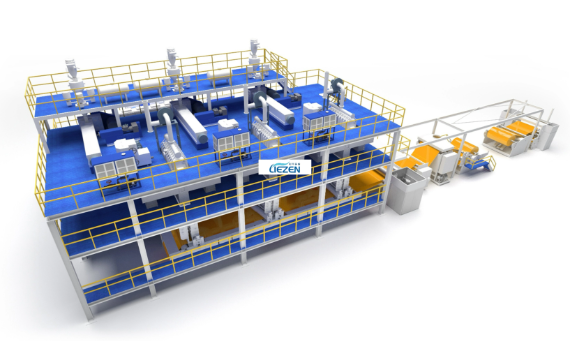
Figure 2: quality control and inspection within the nonwoven machine production process — factory view.
How Lizen Supports Parameter-Led Selection
Changzhou LieZen Non-woven Machinery Co.,Ltd. has been a professional manufacturer of PP spunbond nonwoven fabric machines since 2003, operating a 30,000 m² facility with 270 employees, a research and development team of 10 engineers, and an annual output of 50 units. Roughly 60% of production is exported, with the United States as a main market, and the company reports almost 1,000 complete sets of standardised and customised nonwoven production lines delivered to 30 countries.
The line range covers Single S, SS, SSS, meltblown, SMS, SMMS, SSMS, SMMSS, PET and bi-component nonwoven machines. Customisation scope is documented as web width, capacity in kg/h or m/min, layer count, inline testing and QC, automation and HMI, and material handling modules. Production runs in ODM mode with a minimum order quantity of one unit and a monthly capacity of four units.
Quality control is structured around factory acceptance testing (FAT), performance and process testing, and on-site installation and acceptance (SAT), with support for inline output and quality checks. After-sales scope includes installation and commissioning, on-site training, spare parts supply and remote technical support, with specific service commitments confirmed with sales.
The company's quality management system is certified to ISO 9001:2015 under certificate number 27325Q20007R0S, issued by Zhongren Certification Co.,Ltd., covering research and development, assembly and sales of non-woven equipment, valid from 6 January 2025 to 5 January 2028. Certification is one part of a wider compliance picture: safety requirements for nonwoven machinery are governed by ISO 11111-3:2005, and general textile machinery safety requirements, including nonwoven lines, fall under EN ISO 11111-1:2016 for CE marking compliance in Europe.
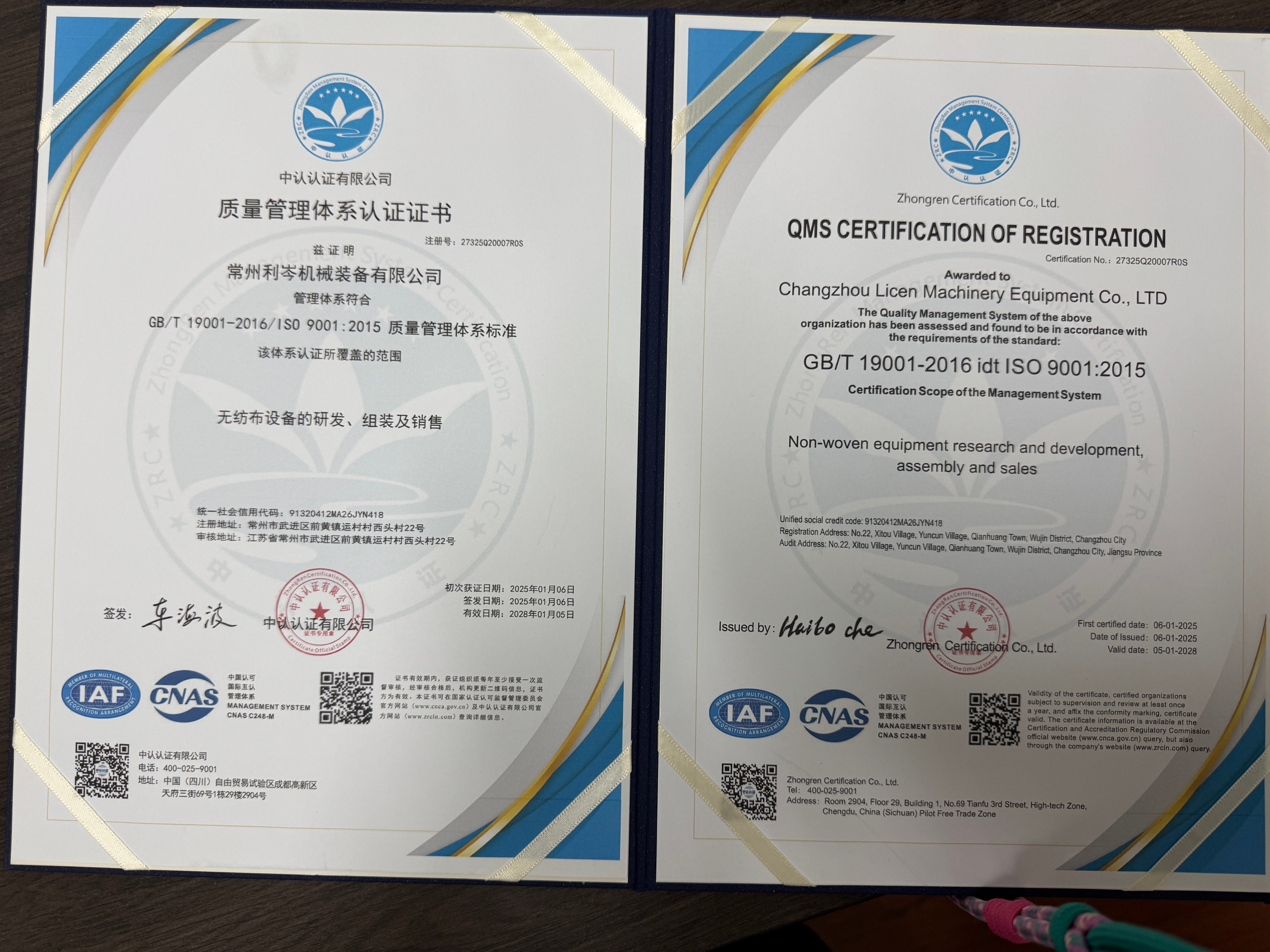
Figure 3: QMS certification of registration of the quality management system.
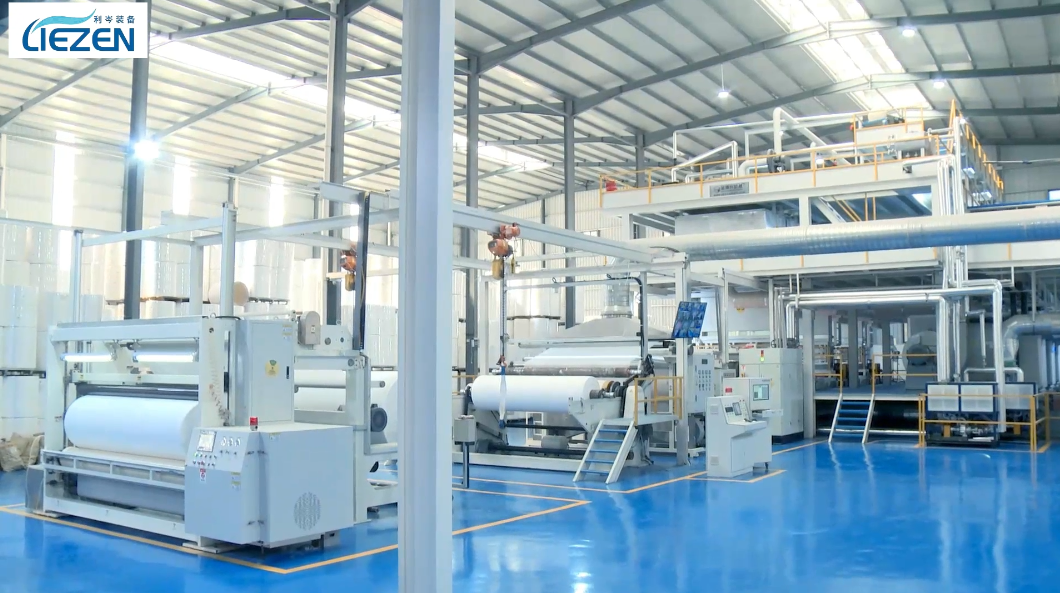
Figure 4: manufacturing and assembly area for nonwoven machines — factory view.
Frequently Asked Questions
Which safety and quality standards apply when specifying a nonwoven fabric machine?
Safety requirements for nonwoven machinery are governed by ISO 11111-3:2005, and general textile machinery safety requirements — which include nonwoven lines — fall under EN ISO 11111-1:2016 for CE marking compliance in Europe. On the quality management side, ISO 9001 is the standard reference for verifying a manufacturer's quality system. LieZen's system is certified to ISO 9001:2015 under certificate number 27325Q20007R0S, issued by Zhongren Certification Co.,Ltd., covering research and development, assembly and sales of non-woven equipment, valid from 6 January 2025 to 5 January 2028.
Which machine parameters can be customised, and which are fixed by the configuration?
Customisation is documented for web width, capacity expressed in kg/h or m/min, layer count, inline testing and QC, automation and HMI, and material handling modules. What is effectively fixed by the chosen configuration is the process logic: a spunbond-only line cannot produce meltblown barrier layers, and a meltblown layer does not replace the strength contributed by spunbond beams. This is why the configuration decision comes first and the remaining parameters are then tuned within it. Single S, SS, SSS, meltblown, SMS, SMMS, SSMS, SMMSS, PET and bi-component configurations are all available within the same line family.
What drives the cost of a nonwoven production line?
Cost is driven by configuration and layer count first, then by effective web width, speed class, bonding arrangement, automation and inline QC scope, and material handling modules. Raw-material capability also matters, since PET or bi-component lines add engineering content compared with a straight PP spunbond line. A wider, faster line with a full layer stack and closed-loop automation costs more to build and more to run than a narrow output-led line — but the relevant comparison is never purchase price alone. The decision should be made against the fabric mix the line will sell over its service life, which is why parameter priorities are ranked before commercial terms are discussed.
How can line performance be validated before shipment and during installation?
Validation is structured around three stages: factory acceptance testing (FAT), performance and process testing, and on-site installation and acceptance (SAT). Inline output and quality checks can be included within the line scope so that the same measurement discipline used at acceptance is available in routine production. The practical requirement is to agree measurable acceptance criteria against your own fabric specification before the order is placed — width, capacity target, layer configuration and fineness — so that validation compares the machine against a defined standard rather than a general impression.
What lead time should be expected, and what is the minimum order quantity?
The documented minimum order quantity is one unit. Production lead time runs 3–6 months in peak season and 1–3 months off season, with a monthly manufacturing capacity of four units. Because parameter decisions — width, layer count, speed class and automation scope — have to be settled before a slot is confirmed, buyers in the evaluation stage usually get the most accurate schedule by fixing the configuration first and then locking dates. To discuss a configuration, contact Lizen Machinery at www.lizen-equipment.com, by email at managerl@lizen-equipment.com, or on WhatsApp at +86 188-8818-2509.
Conclusion: Rank the Parameters Before Comparing Suppliers
Nonwoven fabric machine selection becomes manageable once the parameters are ordered by production objective. Configuration and layer count define the fabric. Effective width defines hourly output and must match converting. Production speed, not mechanical speed, defines what the line can sell. Filament fineness and bonding define quality and hand feel. Raw-material handling and inline quality control determine whether those targets hold over a long production run.
Suppliers should then be compared on how clearly they can connect each of those parameters to your fabric specification, how they validate it through FAT, performance testing and SAT, and how they support the line afterwards. That comparison is technical before it is commercial — and it is the one that protects the investment long after the quotation has been filed away.
Next Step
Send your fabric specification — end use, weight range, converting width and barrier or softness requirements — and the Lizen team will map it to a documented configuration and a parameter set for discussion. Samples and quotations are handled per project through www.lizen-equipment.com or managerl@lizen-equipment.com.

Have Questions or Need More Details?
Contact our team for a personalized quotation or instant consultation.
Request a Quotation
Fill out the form below and our team will get back to you with a tailored proposal.
WhatsApp Direct Chat
Prefer to chat in real-time? Message us on WhatsApp for instant assistance & quick answers.
- Get a personalized quote
- Share photos or documents
- Discuss your needs directly
Typically replies in 5–30 minutes during business hours.