
Matching a Nonwoven Fabric Machine to Your Project: A Scenario-Based Selection Guide
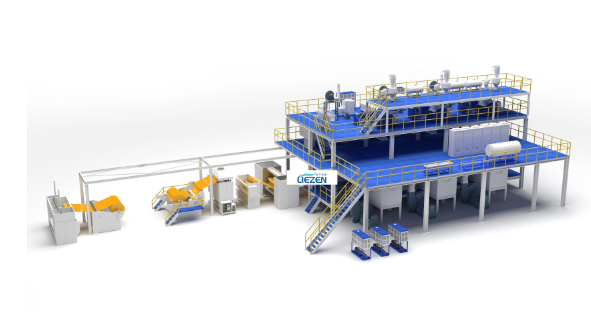
Choosing a nonwoven fabric machine is not a matter of picking the fastest or the most expensive line. It is a matter of matching process technology to the product you intend to make, the regulations you must meet, and the operating environment where the line will run. For buyers in the research and evaluation stage, the right approach is to define the project scenario first.
Lizen Machinery Co., Ltd. (Changzhou LieZen Non-woven Machinery Co.,Ltd.) is a manufacturer of PP spunbond, meltblown, and spunmelt nonwoven production lines. The company has built nearly 1,000 complete sets of standardized and customized nonwoven production lines for customers in 30 countries over almost 20 years. Its SEEK WINWIN product family includes Single S, SS, SSS, melt blown, SMS, SMMS, SSMS, SMMSS, PET, and bi-component nonwoven machines. This guide uses that product family as a reference to explain how to select a nonwoven fabric machine or nonwoven production line based on your specific manufacturing scenario.
Why Project Fit Matters More Than Machine Brand
Many buyers search for a nonwoven fabric machine and compare catalogs, only to find that the right machine depends on the end product. A line that works well for packaging may not produce medical-grade barrier materials. A high-speed spunmelt line may be excessive for agricultural covers. When the machine does not match the scenario, the buyer faces gram-weight variation, high energy consumption, frequent changeovers, and product rejection.
These are the dimensions that matter in project adaptation:
- End-product requirements: barrier, filtration, strength, softness, and flame resistance.
- Raw material and process: polypropylene (PP) spunbond, meltblown, or combinations.
- Line scale: effective width, production speed, and number of layers.
- Operating environment: continuous industrial operation, cleanroom conditions, and available utilities.
- Auxiliary equipment: traction units, winding and rewinding, heating and temperature control, slitting, cutting, and packaging.
- Compliance: safety standards such as ISO 11111-3:2005 and EN ISO 11111-1:2016 for CE marking.
These criteria should be translated into a line specification before comparing manufacturers.
Industry Background: Nonwoven Machinery Demand in Context
The global nonwoven machinery market was valued at USD 6.8 billion in 2025 and is projected to reach USD 12.1 billion by 2034, according to Dataintelo. Asia Pacific accounted for 43.7% of revenue in 2025. China produced 8.56 million tons of nonwovens in 2024, a 5.1% year-on-year increase, and exported 1.52 million tons valued at USD 4.04 billion, based on CNITA and China Customs data.
Technology mix matters as well. Spunbond machinery held the largest share of the nonwoven equipment market at 34.2% in 2025, and spunlaid technology represented 48.4% of global nonwoven fabric market share in 2023. PP is the dominant raw material for spunbond production, accounting for over 53% of that segment in 2026. Disposable products made up about 59.8% of nonwoven market applications in 2023, while the automotive nonwoven market reached USD 3.6 billion in 2025.
These figures reflect a market where buyers need both volume and versatility. The practical question is how to choose a nonwoven making machine that fits the intended project without adding unnecessary complexity or cost.
Detailed Solution: Mapping Spunbond, SMS, and Spunmelt Lines to Applications
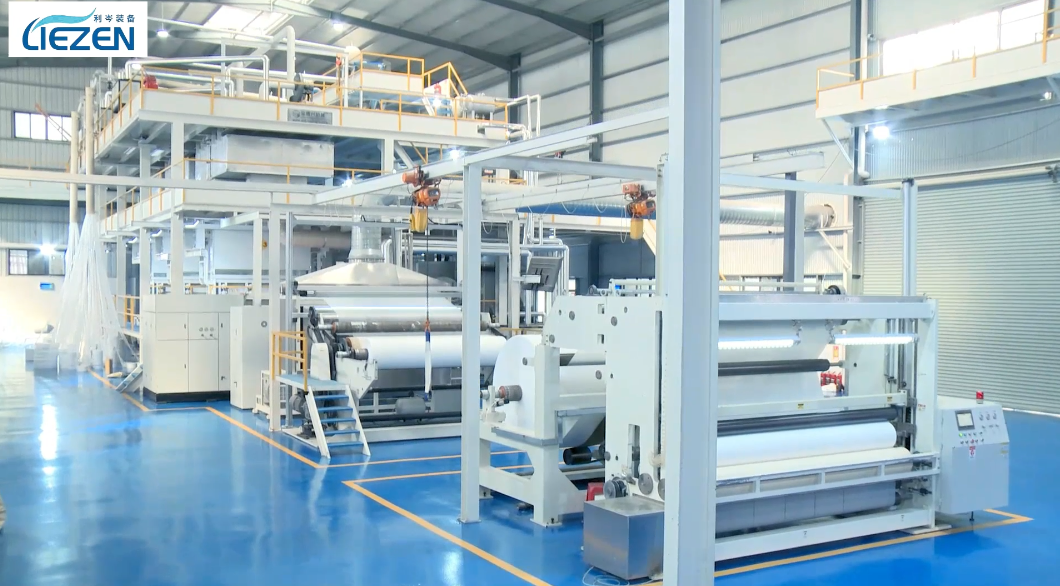
Lizen Machinery offers a range of nonwoven machines covering Single S, SS, SSS, melt blown, SMS, SMMS, SSMS, SMMSS, PET, and bi-component configurations. Each configuration changes the fabric’s structure and therefore its end-use performance.
The company operates a 30,000 m² factory in Changzhou, with about 270 employees and an R&D team of 10 engineers. Its annual output capacity is about 50 complete units, and over 60% of products are exported, mainly to the USA. These scale indicators help buyers compare supplier capacity during the evaluation stage.
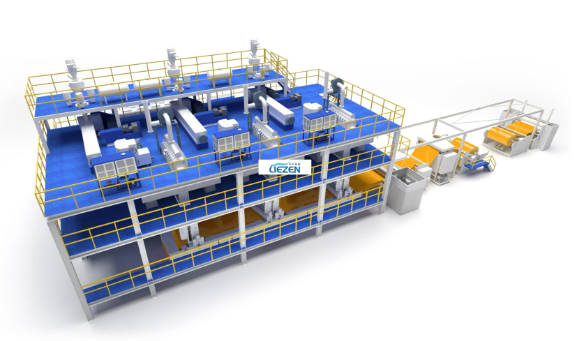
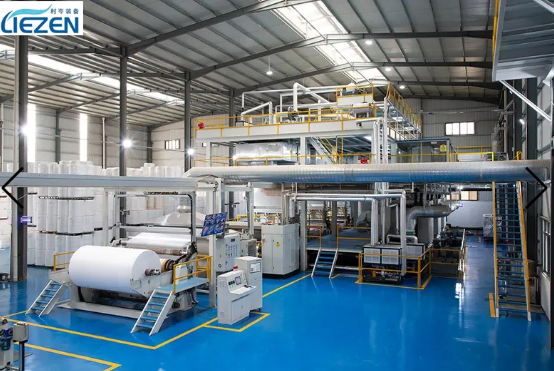
In a spunbond line, polypropylene chips are melted, extruded, and drawn into filaments that are laid on a forming belt. Multiple beams can be added: SS for two spunbond layers, SSS for three. Meltblown layers add fine fibres that improve filtration and liquid barrier performance. An SMS or SMMS line combines spunbond and meltblown layers in one continuous process, which is why spunmelt machines are common in hygiene and medical production.
SEEK WINWIN Model Configurations
Three SEEK WINWIN configurations cover a wide range of project scenarios:
- Double Beams PP Spunbond Nonwoven Fabric Machine (SW-SS): effective width 1600–3200 mm, production speed below 250 m/min, mechanical speed below 300 m/min, filament fineness 1.5–2.0D.
- Automatic SSS Spunbonded Polypropylene Fabric Making Machine (SW-SSS): effective width 1600–3200 mm, production speed below 400 m/min, mechanical speed below 450 m/min, filament fineness 1.5–2.5D.
- SMMS Spunmelt Non Woven Machine (SW-SMMS): effective width 1600–3200 mm, production speed below 400 m/min, mechanical speed below 450 m/min, filament fineness 1.5–2.0D.
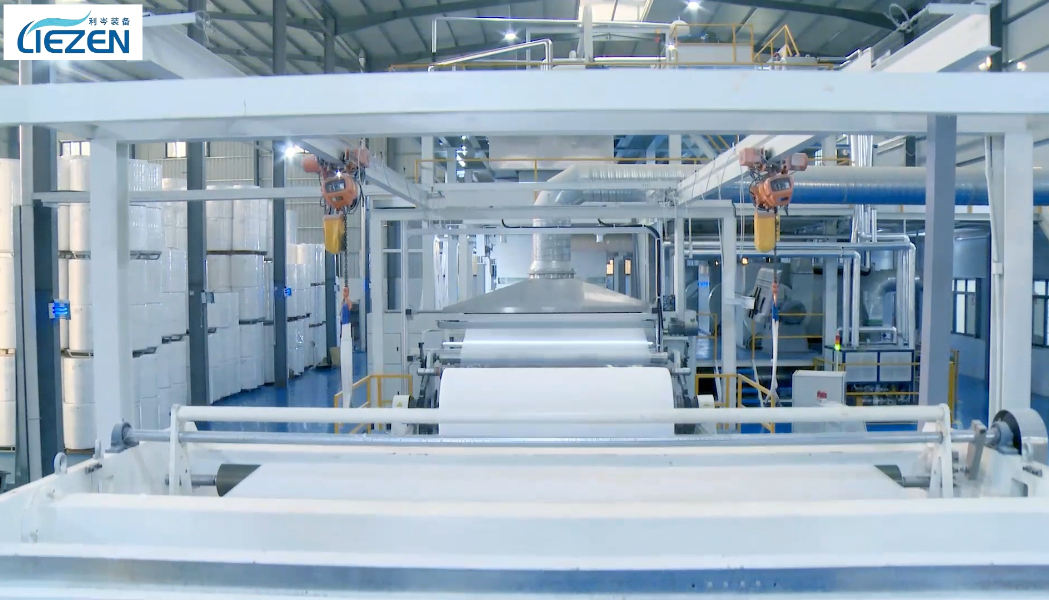
All three models use polypropylene (PP) as the main raw material. Equipment construction mainly uses carbon steel, stainless steel, alloy parts, and electrical components. The selling points common to the series include high production stability and uniform fabric gram weight, flexible formula adjustment for multiple nonwoven products, modular structure for convenient maintenance, high automation, and a closed temperature control system that improves finished product qualification rate.
For project-specific adaptation, Lizen supports customization of web width, capacity in kg/h or m/min, layer count, inline testing and quality control, automation/HMI, and material handling modules. Auxiliary devices such as traction units, winding and rewinding, fans and air compressors, heating and temperature control, slitting/cutting, and packaging equipment can be integrated. The line can also support custom requirements including electrostatic treatment, flame-retardant options, and medical-grade clean standards.
Step-by-Step: How to Build a Project-Specific Machine Specification
- Define the end product. Confirm whether the fabric will be used for hygiene, medical, automotive, agriculture, apparel, packaging, or a mix.
- Select the process. For filtration and hygiene, choose a spunmelt line such as SMS, SMMS, SSMS or SMMSS. For general packaging, agriculture, and lower-cost applications, a spunbond SS or SSS line is often sufficient.
- Set output requirements. Choose effective width and speed from available models, for example 1600–3200 mm width and production speeds below 250 to below 400 m/min depending on the process.
- Calculate raw material demand. All common models use PP polymer, so pellet sourcing, drying, and dosing should match line capacity.
- Determine automation level. High automation reduces manual labour, but the right level depends on operating cost and operator availability.
- Confirm auxiliary equipment. Include traction, winding, rewinding, air compressors, heating and temperature control, slitting, cutting, and packaging modules.
- Plan acceptance and installation. Lizen offers factory acceptance testing (FAT), performance/process testing, and on-site installation and acceptance (SAT).
- Prepare after-sales support. Installation and commissioning, on-site training, spare parts supply, and remote technical support are part of the delivery discussion.
Use Cases: Which Nonwoven Production Line Fits Which Scenario?
Medical and Hygiene Products
Masks, protective wear, sanitary napkins, and diapers require layered structures with filtration and liquid barrier properties. A spunmelt line such as SMS, SMMS, or SMMSS combines mechanical strength with fine meltblown fibres. Medical projects may also need cleanroom-compatible layouts and medical-grade clean standards. The SW-SMMS configuration is a common reference for this segment.
Automotive Interior Nonwovens
Automotive interior liners and insulation need dimensional stability and resistance to heat and wear. Nonwoven production lines for this sector often require wider effective widths and flexible formulation. Lizen’s portfolio includes PET and bi-component nonwoven machines, which support different polymer systems relevant to automotive interior applications. The broader automotive nonwoven market was valued at USD 3.6 billion in 2025, indicating an active project segment.
Apparel, Home Textiles, Agriculture, and Packaging
For agricultural covers, nonwoven bags, packaging, and home textiles, PP spunbond lines provide a practical balance of cost and physical properties. SS or SSS lines are often selected because they deliver high output at efficient cost. If the product will be exposed to outdoor conditions, electrostatic treatment or flame-retardant options can be specified.
Turnkey Delivery and Upgrade Projects
Lizen supports turnkey production line delivery, single-machine supply, and process modification or upgrade projects. A documented case from Pakistan involved two Lizen units used to produce nonwoven substrates, mask filter media, sanitary product fabrics, automotive interior liners, agricultural covers, and nonwoven bags. The project illustrates how one machine family can serve multiple applications when the configuration is planned around the product mix.
Comparison Table: SEEK WINWIN Nonwoven Machine Configurations
| Characteristic | SW-SS Double Beams | SW-SSS Automatic | SW-SMMS Spunmelt |
|---|---|---|---|
| Process | Spunbond (2 beams) | Spunbond (3 beams) | Spunbond + Meltblown + Spunbond |
| Effective Width | 1600–3200 mm | 1600–3200 mm | 1600–3200 mm |
| Production Speed | <250 m/min | <400 m/min | <400 m/min |
| Mechanical Speed | <300 m/min | <450 m/min | <450 m/min |
| Filament Fineness | 1.5–2.0D | 1.5–2.5D | 1.5–2.0D |
| Main Raw Material | PP | PP | PP |
| Scenario Fit | General substrate, agriculture, packaging | Higher-strength spunbond, bags, apparel | Medical, hygiene, filtration |
Specifications are from Lizen SEEK WINWIN product data.
Frequently Asked Questions
1. What safety and quality standards apply to nonwoven fabric machines?
Nonwoven machinery safety is addressed by ISO 11111-3:2005 (Textile machinery — Safety requirements — Part 3: Nonwoven machinery). In Europe, general textile machinery safety requirements for CE marking fall under EN ISO 11111-1:2016. ISO 9001 quality management certification is also standard for top-tier nonwoven machinery manufacturers in China.
2. Can the same nonwoven fabric machine be configured for different end products?
Yes. Lizen supports customization of web width, capacity, layer count, inline testing and QC, automation/HMI, and material handling modules. The machine family covers spunbond, meltblown, spunmelt, and SMS/SMMS processes, so the same platform can be adapted to products such as mask media, sanitary napkin fabric, automotive interior liners, agricultural covers, and nonwoven bags.
3. How does line configuration affect investment and operating cost?
More process layers and higher automation generally increase both capital expenditure and potential output. A double-beam SS line is typically a more cost-efficient entry point for standard PP spunbond products, while an SMMS line adds meltblown capability for hygiene and medical applications. Specific cost impact should be confirmed with the supplier using your production targets and local utility conditions.
4. Can I validate machine performance before committing to a full line?
Lizen offers factory acceptance testing (FAT), performance/process testing, and on-site installation and acceptance (SAT). Buyers can also request inline output and quality checks as part of the line design. This allows performance verification before production handover.
5. What is the typical lead time for a nonwoven production line?
Lead time depends on season and order load. Lizen’s general lead time is 3–6 months during peak season and 1–3 months during the off season. To get current scheduling, sample availability, and a quotation, contact Lizen Machinery sales with your project specification.
Conclusion: Start With the Project, Then Choose the Line
A nonwoven fabric machine is most valuable when it is selected for the exact product scenario. Define your end-use, select a process family, then compare line widths, speeds, and auxiliary equipment. Use the SEEK WINWIN specifications and Lizen Machinery’s customization capabilities as a reference, and validate the line through FAT and SAT before full production.
If you are evaluating a nonwoven production line for a specific project, contact Lizen Machinery Co., Ltd. for a configuration review or quotation. Email managerl@lizen-equipment.com or reach the sales team at +86 188-8818-2509.
Request a quotation or sample consultation — tell Lizen your target application, output width, and product gram weight.
Have Questions or Need More Details?
Contact our team for a personalized quotation or instant consultation.
Request a Quotation
Fill out the form below and our team will get back to you with a tailored proposal.
WhatsApp Direct Chat
Prefer to chat in real-time? Message us on WhatsApp for instant assistance & quick answers.
- Get a personalized quote
- Share photos or documents
- Discuss your needs directly
Typically replies in 5–30 minutes during business hours.