
Nonwoven Fabric Machine Technical Guide: Selection Parameters and Acceptance Criteria
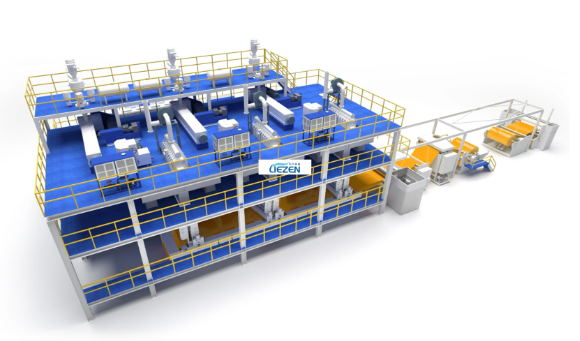
A nonwoven fabric machine is specified correctly only when every selection parameter carries four attachments: a unit, a measurement condition, a pass/fail threshold, and the stage at which that threshold will be verified. Without those four attachments, a specification is a description rather than a requirement, and sign-off at commissioning turns into a negotiation instead of a test.
This guide is written for buyers who have already decided which nonwoven process fits their product and now have to convert that decision into machine parameters, purchasing terms and an acceptance protocol. It covers pp spunbond nonwoven machines, SMS and spunmelt nonwoven machines, and complete nonwoven production lines. The focus is a single chain: technical requirement, parameter, verification method, acceptance record. Comparison logic, ranking logic and general compliance checks are treated only where they change what gets written into the purchase document.
Lizen Machinery Co., Ltd is a nonwoven machinery manufacturer based in Changzhou, Jiangsu, China. Founded in 2003, the company operates a 30,000 m² factory with 270 employees and an R&D team of 10 engineers, and reports an annual output of around 50 units with exports at 60% of output and the United States as its main market. Its main product is the Single S PP Spunbond Nonwoven Machine, and its range extends to SS, SSS, meltblown, SMS, SMMS, SSMS, SMMSS, PET and bi-component nonwoven machines. The company states it has supplied almost 1,000 complete sets of standardized and customized nonwoven production lines in 30 countries.
Problem Definition: Why Parameter Lists Collapse at Commissioning
Most specification disputes are not technical disagreements. They are documentation gaps. A parameter that is not tied to a measurement condition cannot be reproduced on site; a threshold without a verification stage cannot be enforced; a verification stage without a named responsible party cannot be scheduled into a commissioning window.
Five gaps appear repeatedly in nonwoven machine purchase documents:
- Output quoted without a basis. Speed or capacity is written as a single figure, with no reference to the gsm, line width and raw material at which it applies.
- Width quoted without the finishing conditions. Edge trim, tolerance and winding format are left out, so the usable fabric width is undefined even though the machine width is agreed.
- Functions described by adjective. Words such as automatic, intelligent or high capacity are used where a defined function and its control boundary are needed.
- Bonding described by label instead of parameter. The bonding method is named, but the property it must control — the balance between strength and handfeel in the finished fabric — is never written down.
- Acceptance reduced to a walk-through. No mechanical performance test, no retained pilot production sample, no agreed list of what must be demonstrated before payment.
The commercial consequence is predictable. A nonwoven production line carries risks that exist before any saleable fabric is produced: transport and logistics, installation and commissioning, equipment failure, raw material price volatility, and compliance or certification risk. Each risk has a recognized control method — secure packaging, a packing list with inspection reports, on-site training and commissioning, spare-parts lists with remote support, and contractual responsibilities backed by acceptance criteria. A contract can only enforce what the technical annex defines, so an imprecise annex converts controllable risk into open-ended cost.
Industry Background: What the Market Data Changes About Specification
The global nonwoven machinery market was valued at USD 6.8 billion in 2025 and is projected to reach USD 12.1 billion by 2034, according to Dataintelo. Within that market, spunbond machinery held the largest share of nonwoven equipment at 34.2% in 2025, and Asia Pacific accounted for a 43.7% revenue share in the same year. MarketsandMarkets attributes Asia-Pacific demand growth to hygiene products and medical-grade materials.
China's production base sets the operating context for most new lines. CNITA reports national nonwoven fabric output of 8.56 million tons in 2024, a 5.1% year-on-year increase, with spunbonded nonwovens at 3.88 million tons, up 4%. Meltblown output in China fell 22.9% to 108,000 tons in 2024 as post-pandemic capacity stabilized. On the material side, Fortune Business Insights places polypropylene at over 53% of the spunbond segment in 2026 (53.92%), and projects the spunbond technology market to grow at a CAGR of 6.20% from 2026 to 2034. Grand View Research records spunlaid technology at 48.4% of the global nonwoven fabrics market in 2023, with disposable applications at approximately 59.8% of demand.
Three specification implications follow. First, because spunbond dominates both equipment and fabric volumes, parameter discipline around web formation, bonding and gsm stability covers the majority of real projects. Second, the meltblown correction means a buyer adding meltblown or SMS capability should define acceptance against the media grade actually being sold, not against peak-market assumptions. Third, safety and quality references are already standardized and can simply be written into the annex: ISO 11111-3:2005 governs safety requirements for nonwoven machinery, EN ISO 11111-1:2016 covers general textile machinery safety for CE marking in Europe, and ISO 9001 is the common reference for a manufacturer's quality management system.
Detailed Solution: A Five-Group Parameter Architecture
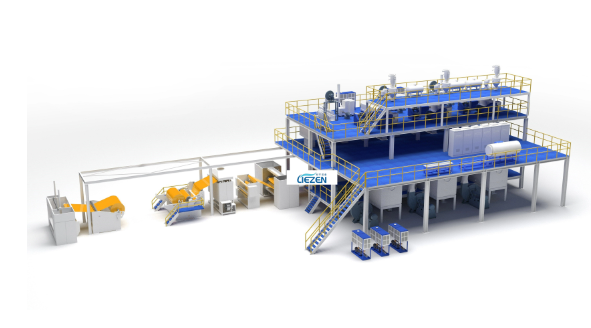
The architecture below runs in a fixed order: product first, process second, configuration third, commercial fourth, acceptance last. Each later group inherits constraints from the earlier ones, which is why reordering the sequence produces specifications that cannot be tested.
Group 1 — Product-defined parameters
These parameters belong to the buyer and cannot be delegated to a supplier. They include the fabric gsm range and the points within that range that matter commercially, the usable fabric width and trim allowance, the layer structure, the end-use performance expectations for the application, and the roll format required by downstream converting. A machine cannot be accepted against a fabric requirement that was never written down, and a supplier cannot be penalized for missing a gsm point that was not in the brief.
Group 2 — Process parameters
Process parameters translate the fabric target into machine behavior: web formation, filament spinning, cooling and quenching air, drawing, bonding and winding. For spunbond and spunmelt nonwoven machines, the bonding stage deserves particular attention because it governs the trade-off between strength and handfeel. Specify the property to be controlled and the fabric sample at which it will be judged, rather than naming a component and assuming the outcome.
Group 3 — Machine configuration parameters
Configuration covers line composition and the supporting systems: the number and order of beams, drive and heating solutions, control system scope, inspection and automation level, and the interface to upstream and downstream equipment. Configuration is also where supplier categories diverge. Differences between traditional domestic equipment, other Chinese suppliers and imported-brand machines typically appear in automation level, process stability, energy efficiency, after-sales service and price — but those differences can only be quantified through a side-by-side comparison of specified models against defined conditions. Category-level claims about a machine class are not verifiable and should not enter the purchase document. The same rule applies to energy efficiency: it depends on model, drive and heating solution, and is only meaningful when measured on the models being quoted.
Group 4 — Commercial and logistics parameters
Commercial terms must sit in the same document as the technical annex, not in a separate file. For nonwoven machinery the usual baseline is a minimum order quantity of 1 unit, delivery by sea, land or air with trade terms such as FOB or CIF, and payment by T/T or L/C. Specific delivery terms and specific payment conditions remain subject to confirmation with the supplier's sales team and the final contract. Packaging standard, packing list and inspection reports belong here as well, because they are the physical controls for transport and logistics risk.
Group 5 — Acceptance parameters
Acceptance is the stage that converts the previous four groups into evidence. The standard structure is a factory acceptance test (FAT) before shipment and a site acceptance test (SAT) after installation and commissioning, each including mechanical performance tests and pilot production sample checks. Every parameter from Groups 1 to 3 should be assigned to exactly one of FAT or SAT, with its measurement condition and pass/fail threshold restated at the point of use.
| Parameter group | What the buyer must write into the document | Evidence that closes it |
|---|---|---|
| Product-defined | gsm range and priority gsm points, usable width and trim, layer structure, roll format | Signed product brief referenced by the technical annex |
| Process | Bonding property to be controlled, web formation and winding requirements, measurement conditions | FAT mechanical performance test results plus retained fabric samples |
| Configuration | Beam count and order, drive and heating solution, control scope, automation level, interfaces | Configuration list in the contract annex, verified against the delivered line |
| Commercial | MOQ, delivery mode and trade term, payment method, packaging and inspection documents | Contract, packing list, inspection reports |
| Acceptance | FAT and SAT scope, pilot production sample checks, sign-off authority and sequence | Signed FAT and SAT records with sample retention |
Step-by-Step Breakdown: From Product Brief to Signed Acceptance Protocol
- Freeze the product brief. Write the gsm range, usable width, layer structure, application and roll format as a standalone document, with the commercially critical gsm points marked. This document is the parent of everything that follows and should be referenced by version number in the technical annex.
- Convert the product brief into a line type and configuration. Single S, SS, SSS, SMS, SMMS, SSMS, SMMSS, meltblown, PET and bi-component structures serve different product roles. Select the structure from the fabric requirement, then list the equipment that structure implies — not the other way round.
- Define measurement conditions for every parameter. For each parameter, record the raw material grade, the gsm and width at which the figure applies, the run duration, and the sampling method. Polypropylene dominates spunbond production, but grade and additive assumptions still differ between buyer and supplier and must be fixed in writing.
- Split FAT and SAT scope explicitly. Put everything that can be demonstrated at the builder's works into FAT — mechanical performance tests and pilot production sample checks at agreed gsm and width points. Reserve for SAT the parameters that depend on installation: commissioning behavior, line stability at operating conditions, and fabric quality after site integration.
- Attach commercial terms to the technical annex. MOQ, delivery mode, trade term, payment method, packaging, packing list and inspection reports go into the same revision-controlled document set. Confirm the specific terms with the supplier before signature rather than assuming them.
- Build the acceptance protocol document. One table, one row per parameter: parameter, unit, measurement condition, threshold, FAT or SAT, responsible party, evidence to be recorded. Anything without a row does not exist as a requirement.
- Plan installation, commissioning, training and long-term support. On-site training and commissioning, spare-parts lists, remote support arrangements and warranty terms should be agreed before shipment, because they determine how fast the line returns to production after a stoppage. The supplier's installation, commissioning and after-sales support scope should be documented, and any warranty detail confirmed with the vendor in the contract.
Self-check before the RFQ leaves your desk. Does every performance figure have a gsm, a width and a raw material attached? Is every adjective replaced by a measurable function? Does each parameter appear in exactly one acceptance stage? Is the pilot sample quantity, retention period and storage location agreed? Is the payment milestone tied to a signed record rather than a calendar date? Is the spare-parts list attached rather than promised?
Use Cases: How the Same Parameter Logic Changes by Application
Sanitary napkin nonwoven fabric machine and hygiene lines
Hygiene remains the largest demand pool, with disposable products at approximately 59.8% of nonwoven applications in 2023. For a line feeding sanitary product converting, the parameters that decide acceptance are gsm consistency across the production window, handfeel at the specific gsm used, usable width matched to the converting equipment, and roll winding quality. Acceptance should therefore be built around sample rolls at each priority gsm point, not around a single demonstration run.
Medical filter media and SMS or meltblown lines
Medical-grade media puts the meltblown layer under scrutiny, and the 22.9% contraction of Chinese meltblown output in 2024 is a reminder that media demand has normalized. Buyers specifying an SMS nonwoven machine should define acceptance against the media grade they will actually sell, and should not inherit a specification written for a different product during a peak period. Filtration-relevant properties should be checked on retained pilot production samples so that FAT and SAT results are comparable.
Automotive interior nonwoven production line
The automotive nonwoven market reached USD 3.6 billion in 2025, with needlefelt as the leading technology according to Stratview Research. That detail matters for specification honesty: the automotive interior category is not a single process. A spunbond or spunmelt line intended for automotive interior layers must be specified around the exact layer it will produce and the performance that layer must meet, and the acceptance criteria must reference that layer — not the wider vehicle interior application, whose remaining layers come from other processes.
Pilot-to-mass production and capacity steps
The same line architecture can serve a pilot phase and later batch supply, including medical filter media mass production, sanitary product roll production and automotive interior batch supply. When a first line is bought with expansion in mind, write the acceptance protocol so that it can be reused unchanged at the next capacity step. A protocol that only works once has no value in a multi-line program.
Long-term operation: acceptance criteria as a partnership document
Operational differences between suppliers show up after commissioning — spare-parts availability, maintenance difficulty and remote-support response time. These belong in the contract from the start, because a spare-parts strategy agreed at signing is a delivery commitment, while one discussed after a breakdown is an emergency purchase. A signed acceptance record also creates a performance baseline for the life of the line: it is the reference used in maintenance planning, upgrade discussions and support escalations.
Comparison Table: Line Types and the Parameters They Force You to Fix
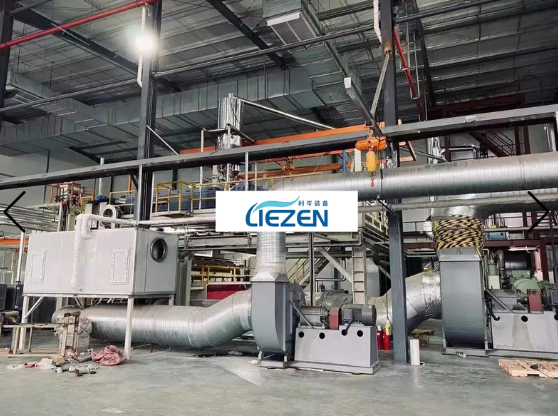
The comparison below is organized by parameter obligation rather than by performance figures, because a performance figure is only meaningful at a defined gsm, width and raw material. Layer structure follows the industry naming convention of each configuration.
| Line type | Layer structure indicated by the name | Product role (general industry application) | Parameters to fix before quotation | Acceptance evidence to request |
|---|---|---|---|---|
| Single S PP spunbond nonwoven machine | One spunbond layer | Single-layer spunbond fabrics for general converting; entry configuration | gsm range, usable width, output basis, bonding method, winding format | FAT mechanical performance test at priority gsm points; retained pilot samples |
| SS spunbond | Two spunbond layers | Higher basis-weight and layered spunbond fabrics | Layer split and its effect on properties, gsm range, width, output basis | FAT records per layer combination plus pilot production samples |
| SSS spunbond | Three spunbond layers | Layered spunbond structures where strength and coverage both matter | Layer sequence, gsm allocation, bonding parameters, width | FAT records per layer sequence; SAT stability run |
| SMS / SMMS / SSMS / SMMSS | Spunbond and meltblown layers in the named order | Barrier and filtration-adjacent structures for hygiene and medical media | Meltblown basis weight range, layer order, bonding, width, output basis | FAT plus pilot sample checks against the target media grade; SAT after integration |
| Meltblown | Meltblown layer production | Fine-fiber media layers, typically combined with spunbond | Target basis weight, die configuration, air system scope, width | FAT mechanical performance tests and retained media samples |
| PET and bi-component | Non-PP or multi-component filament structures | Applications outside standard polypropylene spunbond | Polymer specification, spinning configuration, bonding, gsm range | FAT records at agreed polymer and gsm conditions |
Supplier-level comparison is a separate exercise with its own limits. Differences between traditional domestic equipment, other Chinese suppliers and imported-brand machines generally appear in automation level, process stability, energy efficiency, after-sales and price, but quantifying them requires specified models and defined test conditions. Dataintelo identifies Reifenhäuser Reicofil GmbH and Andritz AG as leading global competitive players in the nonwoven machinery landscape for 2025; that identifies market participants, not a performance ordering for any specific project. The practical rule is that a supplier comparison should be built on identical parameter sets — same gsm, same width, same raw material, same acceptance evidence — otherwise the comparison measures the specification, not the machine.
FAQ
Which safety and quality standards should the acceptance criteria reference?
For nonwoven machinery, ISO 11111-3:2005 (Textile machinery — Safety requirements — Part 3: Nonwoven machinery) is the reference safety standard, and general textile machinery safety for CE marking in Europe falls under EN ISO 11111-1:2016. Quality management systems are commonly verified through ISO 9001. The practical step is to name the applicable standard in the purchase document, require the corresponding declaration or certificate to be delivered with the machine documentation, and confirm with the supplier which certificates apply to your destination market before signing.
What should a factory acceptance test cover before shipment?
A factory acceptance test should cover everything that can be demonstrated at the builder's works. Recommended acceptance includes a factory acceptance test (FAT) and a site acceptance test (SAT), with mechanical performance tests and pilot production sample checks in both stages. Each parameter from the technical annex should appear in one stage only, with its measurement condition recorded — raw material, gsm, width and run duration — so that FAT results can be compared directly with SAT results.
What purchasing terms normally sit next to the technical annex?
The usual baseline is a minimum order quantity of 1 unit. Delivery commonly uses sea, land or air shipping with trade terms such as FOB or CIF, and payment is commonly handled by T/T or L/C; the specific delivery terms and payment conditions are confirmed with the supplier and fixed in the contract. Packaging standard, packing list and inspection reports are part of the same commercial group, because they are the physical controls against transport damage and short shipment.
Can a pilot production sample be used as acceptance evidence?
Yes. Pilot production sample checks are part of the recommended acceptance structure for both FAT and SAT. To make the sample usable as evidence, the document should define the gsm and width of each sample, the layer structure, the quantity produced and retained, where the samples are stored, and who signs them off. Retained samples then serve as the physical reference when the line is commissioned on site and when later disputes about fabric quality arise.
What delivery, installation and after-sales items must be fixed before sign-off?
Before sign-off, confirm the delivery mode and trade term, and write down installation and commissioning scope, on-site training, the spare-parts list with remote support arrangements, and the contractual responsibilities that the acceptance criteria will enforce. Warranty terms and the spare-parts strategy should be agreed with the vendor and recorded in the contract rather than agreed verbally. Buyers who want the full specification-and-acceptance document set for a specific line can request a quotation and a sample discussion through Lizen Machinery Co., Ltd, and ask that the response be structured parameter by parameter, so the reply can be compared directly with other offers.
Conclusion
A nonwoven fabric machine is not selected by choosing the highest figure in a catalogue. It is selected by writing down what the fabric must be, translating that into process and configuration parameters, attaching commercial terms to the same document, and then defining exactly how each parameter will be proven. Done in that order, acceptance becomes a test; done in any other order, it becomes a discussion held under time pressure while a line sits idle.
The same discipline pays off after commissioning. A signed acceptance record with retained samples gives the buyer a performance baseline for maintenance planning, a reference for spare-parts and support discussions, and a fair basis for the next capacity step. That is what turns a machine purchase into a working long-term arrangement rather than a single transaction.
Request a Parameter-Level Quotation
Lizen Machinery Co., Ltd builds Single S, SS, SSS, meltblown, SMS, SMMS, SSMS, SMMSS, PET and bi-component nonwoven machines from Changzhou, Jiangsu, China. Share your gsm range, usable width, layer structure and target application, and request a quotation structured by parameter, together with the FAT and SAT documentation set for your line.
Email: managerl@lizen-equipment.com | Tel: +86-18888182509 | WhatsApp: +86 188-8818-2509 | Web: www.lizen-equipment.com
Address: No. 6 Jingye Road, Qianhuang Town, Wujin District, Changzhou, Jiangsu, China.
Have Questions or Need More Details?
Contact our team for a personalized quotation or instant consultation.
Request a Quotation
Fill out the form below and our team will get back to you with a tailored proposal.
WhatsApp Direct Chat
Prefer to chat in real-time? Message us on WhatsApp for instant assistance & quick answers.
- Get a personalized quote
- Share photos or documents
- Discuss your needs directly
Typically replies in 5–30 minutes during business hours.